
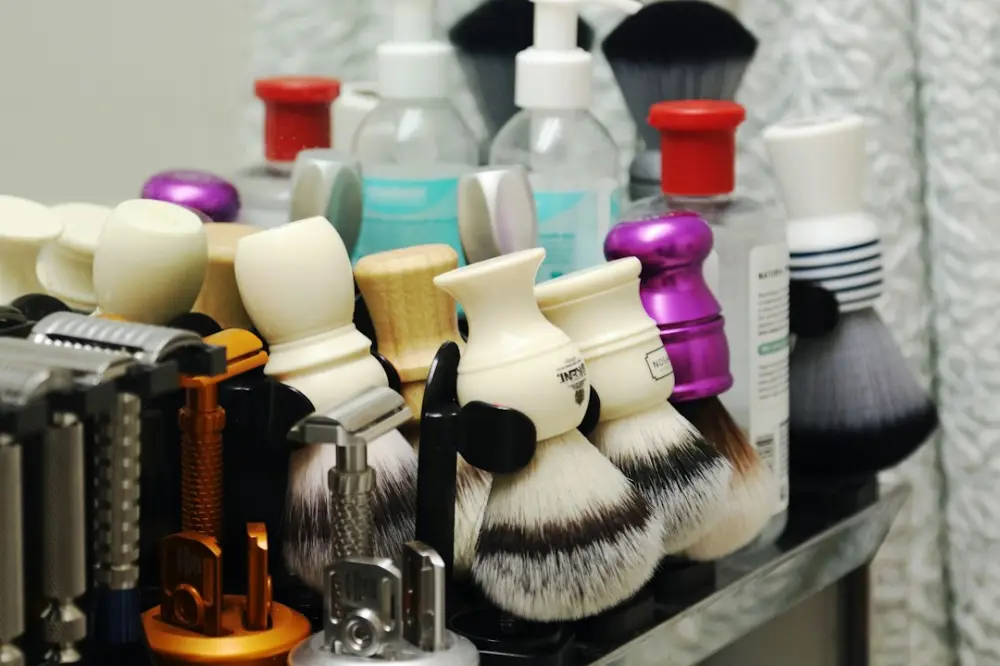
Manageable grooming habits are simple, repeatable actions designed to maintain your appearance without demanding excessive time or mental energy. These routines focus on foundational consistency, prioritizing high-impact basics like skin hydration and beard maintenance over complex, multi-step regimens. By streamlining your daily care, you ensure that grooming remains a sustainable part of your hygiene rather than an overwhelming chore.
The challenge often lies in the friction created by overcomplicated setups or unorganized tools. While social media promotes elaborate rituals, true success comes from a routine that survives your busiest mornings. Reducing the steps between you and your grooming tools allows you to maintain a professional look through habit alone, rather than relying on fluctuating daily willpower.
What Are Manageable Grooming Habits?
A manageable habit is one that survives your worst morning. If you are running late, exhausted, or traveling, a manageable habit is the one you still perform because it takes less than two minutes and requires zero mental heavy lifting. These habits are the antithesis of the "maximalist" grooming trends that cycle through social media. Instead of chasing a shelf full of specialized serums, a manageable approach focuses on high-quality basics that serve multiple purposes.
Consistency is the engine of grooming. Facial hair and skin do not respond well to occasional, intense treatments; they respond to daily, incremental care. For example, applying a small amount of oil daily is far more effective for preventing "beardruff" than doing a deep-conditioning mask once a month. When habits are manageable, they become invisible. They move from the category of "chores" into the category of "hygiene," much like brushing your teeth.
To identify which habits are manageable for you, look for friction points. If your beard trimmer is buried at the back of a cabinet under a pile of towels, you are less likely to use it. If your moisturizer sits in a different room than your shower, you will forget it. Manageable grooming is as much about the organization of your environment as it is about the products you choose. By placing your tools in the direct path of your morning flow, you remove the need for willpower.
Essential Skin and Beard Care for Beginners
The foundation of any grooming routine is the health of the skin. For those with facial hair, this is doubly important because the beard acts as a wick, drawing moisture away from the surface of the face. This often leads to dryness, itching, and flaking. Understanding beard care? a simple guide to the basics starts with recognizing that your face requires different treatment than the rest of your body.
A basic, manageable routine for skin and beard care involves three primary steps:
- Cleansing: Use a gentle face wash or a dedicated beard wash rather than standard bar soap. Bar soaps often contain harsh surfactants that strip away sebum, the natural oil your skin produces to stay supple.
- Hydration: Apply a moisturizer to the exposed skin and a few drops of beard oil to the bearded areas. This ensures that proper grooming supports healthy facial hair by maintaining the lipid barrier of the skin underneath.
- Mechanical Maintenance: Use a boar-bristle brush or a wide-tooth wooden comb to distribute oils and remove dead skin cells. This takes thirty seconds but prevents the buildup that leads to irritation.
The biological reality of skin turnover means that it takes about 28 days for new cells to reach the surface. This is why consistency is non-negotiable. You won't see the full benefit of a new skin routine on day three; you see it on day thirty. By keeping the steps simple—wash, oil, brush—you ensure that you actually reach that thirty-day mark without feeling overwhelmed by the process.
Why Regular Haircuts Anchor Your Daily Look
The most well-groomed beard in the world will look accidental if the hair on your head is overgrown and shapeless. Regular haircuts serve as the "anchor" for your entire aesthetic. When the edges of your hair—the neckline, the sideburns, and the area around the ears—are crisp, it signals intentionality. This allows you to be slightly more relaxed with the rest of your grooming without looking unkempt.
For most men, a manageable schedule involves a professional trim every three to four weeks. Waiting until you "need" a haircut usually means you’ve already spent a week looking shaggy. By scheduling appointments in advance, you remove the decision-making process. It becomes a recurring event on your calendar, much like a work meeting or a gym session. This is a prime example of a "meta-habit"—a single action (booking the appointment) that automates your appearance for the next month.
Between professional visits, you can maintain this anchor with a simple home habit: neck maintenance. Using a safety razor or a dedicated trimmer to clear the "stray" hairs that grow below the natural neckline can extend the life of a haircut by a week or more. This doesn't require a full barber setup; it just requires a mirror and two minutes of attention every few days. Keeping these boundaries clean makes the difference between a beard that looks like a choice and a beard that looks like a lapse in hygiene.
Simple Habits for Better Personal Hygiene
Hygiene is the silent partner of grooming. While skincare and beard maintenance are about the visual, hygiene is about the sensory and the biological. Manageable hygiene habits are those that integrate seamlessly into your existing shower and bathroom routine. One often overlooked aspect is the role of personal hygiene in maintaining the microbiome of the skin, which prevents odors and infections.
Consider the "Triangle of Hygiene": breath, body, and hands. Each can be managed with minimal effort:
- Oral Care: Beyond brushing, using a tongue scraper once a day significantly reduces the bacteria responsible for bad breath. It is a five-second addition that has a higher impact than mouthwash alone.
- Body Care: Focus on areas with high sweat-gland density. If you use a fragrance, apply it to pulse points (wrists or neck) rather than spraying it into the air and walking through it. This ensures the scent lasts longer and interacts correctly with your body chemistry.
- Nail Maintenance: Ragged cuticles or dirty nails can undermine even the most expensive suit or the best-trimmed beard. Keeping a pair of high-quality clippers in your desk drawer or car allows you to address hangnails immediately rather than picking at them.
These habits are about self-respect rather than vanity. When you are physically clean and your breath is fresh, your confidence increases. This isn't about chasing a specific "manly" scent or a bleached-white smile; it’s about the comfort that comes from knowing your physical presence is well-managed. These small wins build a foundation of self-care that makes more complex grooming tasks feel easier to tackle over time.
Professional Grooming Standards at Tu Barba
At Tu Barba, we believe that grooming is a form of informed self-care rather than a series of chores dictated by the fashion industry. Chasing trends is a recipe for frustration; instead, we advocate for aging with confidence and understanding the unique needs of your own face and body. The habits that stick are the ones that respect your time and your biology.
Choosing manageable grooming habits means rejecting the idea that you need to spend a fortune or an hour in front of the mirror to look your best. It’s about the quiet power of the daily routine—the way a simple application of beard oil or a consistent haircut schedule creates a sense of order. When you master the basics, you stop worrying about how you look and start focusing on how you live. Tu Barba is here to provide the practical guidance needed to bridge that gap, ensuring your grooming routine serves your life, not the other way around.